Ask three people what an electrical inspection is and you will get three answers. One is thinking of the walk-through that happened when they bought the house. One is thinking of the visit a city inspector made after a permit was pulled. One is thinking of an electrician spending an hour with the panel cover off. Those are different events with different scopes, and confusing them is how homeowners end up disappointed by a report that never set out to answer their question.
Here is what each one actually covers, what gets looked at, and the moments when homeowners usually decide it is time.
Three different things people call an electrical inspection
The general home inspection during a sale
A home inspection performed as part of a purchase is broad and shallow by design. A generalist looks at roof, structure, plumbing, HVAC and electrical in a single visit. On the electrical side that usually means visible conditions: the service entrance, the panel exterior, a sample of receptacles and switches, visible wiring in unfinished spaces, and obvious defects. The output is often a flag rather than a diagnosis, phrased as a recommendation to have the item reviewed further.
That flag is doing its job. It is not meant to tell you what the repair involves or what condition the rest of the circuit is in.
A dedicated electrical evaluation
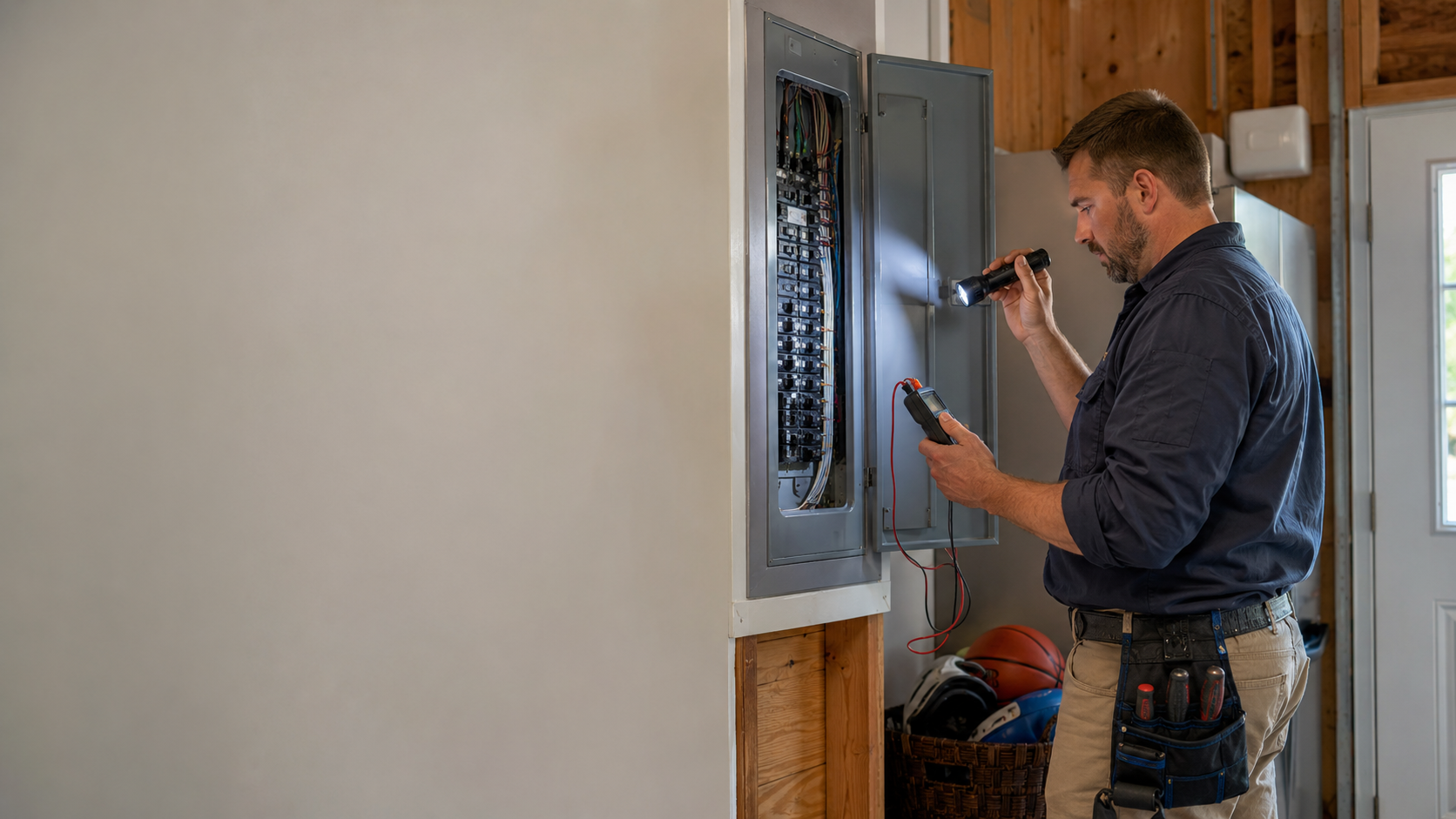
This is the visit most people mean when the question is specific. An electrician looks at one system rather than the whole house, and the scope is set by whatever prompted the call. If a breaker has been misbehaving, the work starts at that circuit. If the concern is capacity, it starts at the service and the panel. This is also where a panel gets opened, which a general home inspection may or may not include.
If a panel is the reason you are asking, it is worth knowing how a panel evaluation is normally handled before anyone arrives, so the visit is not spent on questions you could have answered in advance.
The inspection that follows permitted work
The third kind is not something a homeowner orders. When work is done under a permit, the jurisdiction inspects it. CPSC states the principle plainly in its aluminum wiring guidance: all modifications and additions to installed wiring should be performed and inspected in accordance with the regulations that apply where you live. If a provider proposes work that needs a permit, ask who pulls it and who schedules the inspection, because that answer belongs in the scope from the start.
What a walk-through of the electrical system tends to cover
Scope varies with the reason for the visit, but the same handful of areas come up repeatedly.
- The service and the meter. Where power enters, what condition the entrance is in, and what the service is rated to carry.
- The panel. Breakers or fuses, room for additional circuits, signs of heat, and whether the circuit directory matches reality. The Electrical Safety Foundation International notes in its overview of the home electrical system that service panels installed before 1965 use fuses, that early fuses were commonly used in 30- and 60-amp panels, and that new homes today require 100- to 200-amp service panels.
- Grounding. ESFI describes grounding as the method used to connect an electrical system to the earth with a wire, providing a third path for current in the event of a short circuit or an overload. Whether that path exists, and where, is a question a visual glance at an outlet cannot settle.
- Receptacles and devices. Whether outlets are grounded, where ground fault protection is present, and whether devices work when tested.
- Wiring type and era. ESFI dates knob and tube wiring to the 1800s through the 1930s and aluminum branch wiring to the 1960s and 1970s. Cable markings in an unfinished basement, attic or garage often answer this more quickly than anything else.
- Visible damage. Discoloration, heat marks, damaged insulation, connections that were never made in a box.
Where the findings point at conductors rather than devices, the conversation usually shifts toward wiring and rewiring work rather than a single repair.
When homeowners actually request one
Five situations account for most requests.
- A purchase or a sale. Either to understand what was flagged in the general inspection, or to know what a buyer’s inspector is likely to find.
- Age. ESFI recommends having your home inspected by a qualified electrician if it is older than 40 years or has had a major appliance installed. The same organization notes that more than 30 million homes, roughly one third of the housing stock in the United States, are at least 50 years old, and that fires in these aging homes occur disproportionately often.
- Before a renovation. Cheaper to know what is behind the wall before the drywall goes up than after. That is also when decisions about circuits get made rather than inherited, a theme covered in the notes on planning the electrical side of a renovation.
- A symptom that keeps coming back. Lights that dim, a receptacle that runs warm, or a breaker with a habit. If it is the breaker, sorting out whether the cause sits on one circuit or in the panel narrows the scope before anyone opens anything.
- A new load. A vehicle charger, a shop, a heat pump, a hot tub. ESFI advises having a qualified electrician install new circuits for high-energy use devices, and the capacity question usually gets settled at the panel first.
What an inspection will not settle
An evaluation reports on what can be observed and tested on the day. It does not see conductors buried in finished walls, and it is not a prediction. A panel that looks orderly can still hold a connection that has been loosening for years. This is one reason ESFI’s home electrical safety guidance leans on observable warning signs, including frequent tripping of breakers or blowing of fuses, dimming lights when other devices turn on, a buzzing sound from switches or outlets, discolored outlets, and appliances that seem underpowered.
It also will not decide scope for you. A report separates conditions from opinions about what to do next, and the second part is a conversation, not a verdict.
How to get more out of the visit
- Clear physical access to the panel. Boxes stacked in front of it cost time.
- Write down symptoms with dates and what was running. Specifics beat impressions.
- Know the house. Year built, additions, any rewiring, when the panel was changed if it ever was.
- Ask in advance whether the panel cover comes off during the visit, and whether a written summary is provided.
- Ask which findings are safety items and which are housekeeping. Both belong in a report; they are not the same priority.
- Ask any provider you speak with to confirm their licensing and insurance before work is scheduled. That is a reasonable question and a straightforward one to answer.
Common questions
Is the home inspection from my purchase enough?
It depends what you need from it. For an overview at the moment of sale, it does what it was designed to do. For a specific question about capacity, grounding or a circuit that misbehaves, it is usually the starting point rather than the answer.
Does an inspection include opening the panel?
Not automatically, and it is worth asking before the appointment rather than after. Panel interiors are also where a lot of the useful information lives, which is why panel-related requests are often handled as their own visit.
How often should this happen?
There is no interval that fits every house. ESFI ties its recommendation to two triggers rather than a calendar: a home older than 40 years, or the installation of a major appliance. Renovations, a change of ownership and a recurring symptom are the other three moments worth acting on.
What if the report finds something urgent?
Then the question becomes what gets addressed first, which is a scoping conversation with whoever performs the work. Findings that involve heat, burning smells or exposed conductors are the ones that do not wait.
Checking what is available near you
This site is a connection service. It does not perform electrical work and has no technicians. It routes requests toward participating providers through service-area matching.
If you want to find out what is available at your address, call (844) 958-2599 and describe what you want examined and why. Availability varies. If a participating provider can assist, they may contact you directly, and you decide whether to move forward. You can also read how inspection requests and repair requests are handled on this site.
Leave a Reply