Author: testcheck

  • Adding a 240-Volt Circuit for an EV Charger or Workshop

    A garage that needs a 240-volt circuit is usually one of two households. One just bought an electric vehicle. The other has a table saw, a welder or a compressor and is tired of running everything off a single receptacle by the door. The equipment differs; the underlying question is identical. What does the new load need, and what can the existing service spare?

    Answering the second half first saves a lot of wasted conversation.

    For a vehicle: decide between Level 1 and Level 2 before anything else

    The U.S. Department of Energy’s Alternative Fuels Data Center notes in its guidance on charging electric vehicles at home that most drivers charge overnight using either AC Level 1 or AC Level 2 equipment, and that many owners meet their daily driving range by charging overnight on Level 1, with no additional installation, provided a power outlet on a dedicated branch circuit is available near where they park.

    Level 2 equipment operates at 240 volts and is described as the option for drivers with less regular schedules, longer commutes, or vehicles with large batteries that need more than a typical overnight dwell time to charge fully.

    That framing matters because the installation question only exists if Level 2 is genuinely needed. Two things also worth taking from the same page: outdoor installation and use are safe, including charging in the rain, as long as the equipment is outdoor-rated, and the same page recommends buying equipment that has been safety tested, such as products carrying the ENERGY STAR label, which are tested by a nationally recognized testing laboratory.

    For a workshop: the load profile is different

    A shop circuit is not a charger circuit. A vehicle charger draws steadily for hours; the Alternative Fuels Data Center notes that charging infrastructure is treated as a continuous load under the National Electrical Code, with most of the applicable material in NEC Article 625.

    Shop tools behave in the opposite way. They draw briefly, they start under inrush, and they get used in combinations that are hard to predict from a plan drawing. A dust collector and a saw running together is a different circuit than either one alone. So the useful thing to bring to the conversation is not a wattage total but a list: what tools you own, which ones run at the same time, whether a compressor cycles unattended, and whether you plan to add anything.

    Where the shop is a finished space, the wiring layout question widens beyond the one circuit, and the considerations in the notes on wiring a finished basement or garage apply as much to a workbench as to a family room.

    The panel is where the answer lives

    The Electrical Safety Foundation International describes in its overview of the home electrical system how a 240-volt circuit is formed, using both 120-volt legs of the service rather than one. It also notes that service panels installed before 1965 use fuses, that early fuses were commonly used in 30- and 60-amp panels, and that new homes today require 100- to 200-amp service panels.

    The Alternative Fuels Data Center is blunt about the consequence: electricians can tell homeowners whether their home has adequate electrical capacity for vehicle charging, some homes might have insufficient capacity for Level 2 equipment, and a qualified electrician can add circuits to accommodate the capacity needed.

    Three things get evaluated, and only one of them is the breaker.

    • Physical space. Whether the panel has room for a two-pole breaker at all.
    • Service capacity. What the existing service and everything already on it leave available.
    • The path. How the new conductors get from the panel to the garage, and what that route runs through.

    If the answer to the first two is no, the request becomes a panel-related request rather than a circuit request, and the sequencing changes. Households that have already been through it will recognize the pattern described in the notes on panel upgrades and new construction.

    A word on existing circuits and existing symptoms

    Two shortcuts come up constantly. The first is using the dryer receptacle. Whether an existing 240-volt circuit can serve a second purpose depends on its rating, its conductors, how the receptacle is configured and how the load behaves over time, and it is exactly the kind of question that needs someone looking at the actual circuit rather than a forum thread.

    The second shortcut is adding load to a service that is already showing strain. If a breaker in the house has been tripping, sort out whether the cause sits on one circuit or in the panel before adding a large new one. ESFI’s warning signs of an overloaded system include dimming lights when other devices turn on and frequent tripping of breakers or blowing of fuses, and both are worth resolving first.

    Permits, plans and code

    The Alternative Fuels Data Center states that charging equipment installations must comply with state and city codes and regulations, that appropriate permits may be required from the building and permitting authorities, and that in many areas a site installation plan must be submitted for approval before installation. It recommends contacting your building and permitting authority for information on identifying and complying with the requirements that apply.

    None of that is a reason to be discouraged. It is a reason to ask two questions early: who handles the permit, and does the timeline in the proposal include the approval step.

    One more from the same source: if possible, consult the vehicle manufacturer’s guidance about the required charging equipment before purchasing equipment or electrical services. Buying the hardware first and asking about the circuit second is how people end up with equipment that does not match the installation.

    What to have ready when you call

    1. A photo of the panel with the cover on, showing the breaker layout and the main breaker rating.
    2. The year the house was built and whether the panel has ever been replaced.
    3. What large appliances are already on the service: electric range, dryer, water heater, heat pump, well pump.
    4. Where the vehicle parks or where the bench sits, and roughly how far that is from the panel.
    5. Whether the run would pass through finished space.
    6. The vehicle and its onboard charging capability, or the tool list for a shop.
    7. What else you expect to add in the next few years. A second vehicle changes the arithmetic.

    Common questions

    Can I just plug into the dryer outlet?

    Sometimes people do, and it is still the wrong place to start. Sharing a 240-volt circuit raises questions about the circuit’s rating, the duty cycle of a charger treated as a continuous load, and the receptacle itself. Ask the provider to evaluate the specific circuit rather than assuming a receptacle that fits is a receptacle that suits.

    Does adding a charger mean upgrading the panel?

    Not always. The Alternative Fuels Data Center says some homes might have insufficient capacity, not all of them. Panel space, service capacity and existing load determine it, and that determination is made at the panel.

    Is an outdoor installation acceptable?

    The Alternative Fuels Data Center states that outdoor installation and use are safe, even while the vehicle is charging in the rain, and that outdoor installations require outdoor-rated equipment. Confirm the equipment you are buying is rated for the location you want it in.

    Should the rest of the system be looked at while someone is there?

    If the house is older or has never had an electrical review, many homeowners fold it in. An inspection request covers the service and panel condition in a way a single circuit installation does not.

    Checking what is available near you

    This site is a connection service. It does not perform electrical work and has no technicians. It routes requests toward participating providers through service-area matching.

    If you want to find out what is available at your address, call (844) 958-2599 and describe the load you are adding and what your panel looks like. Availability varies. If a participating provider can assist, they may contact you directly, and you decide whether to move forward. You can also read how wiring requests are handled on this site. Ask any provider you speak with to confirm their licensing and insurance before scheduling work.
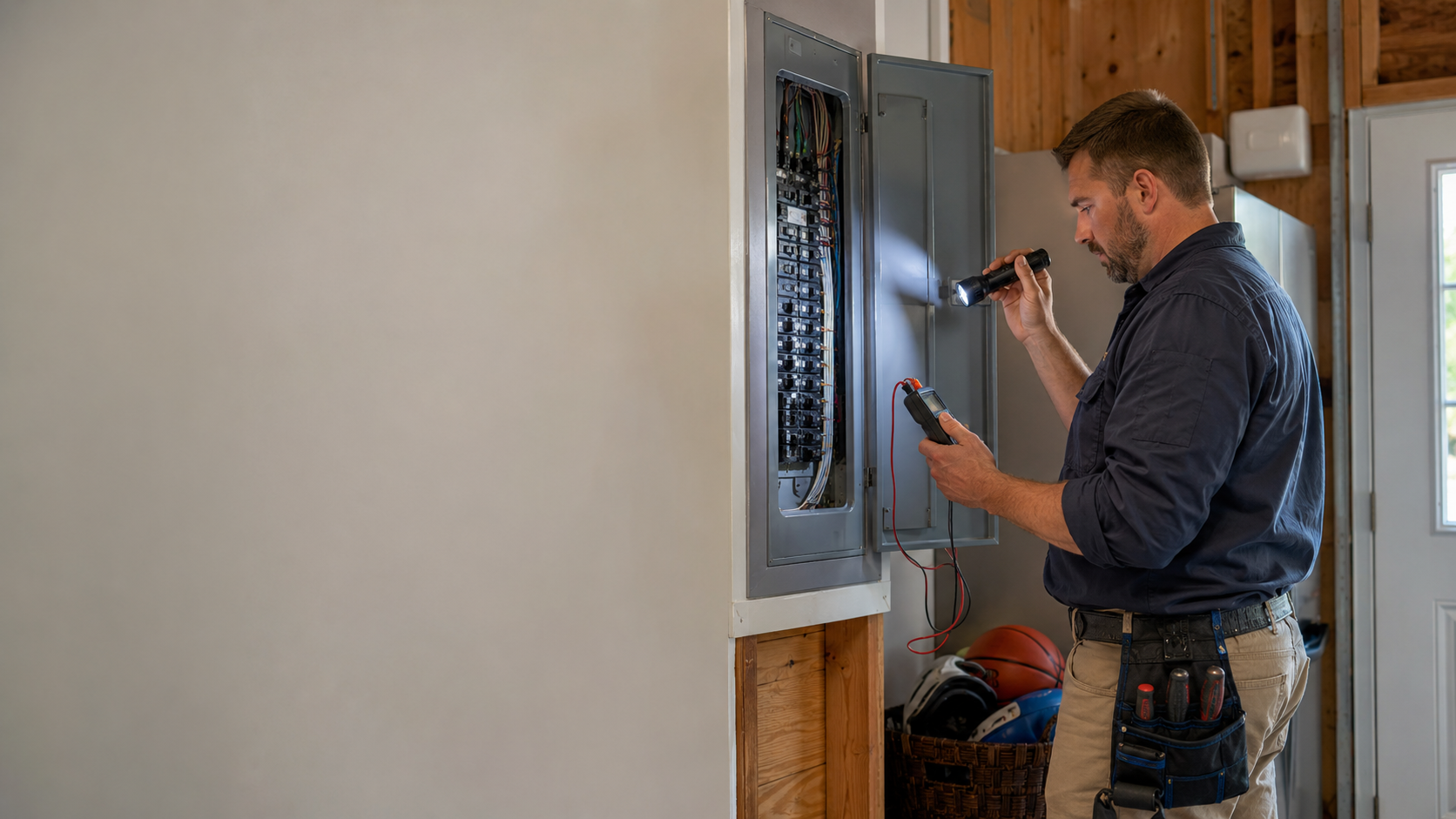
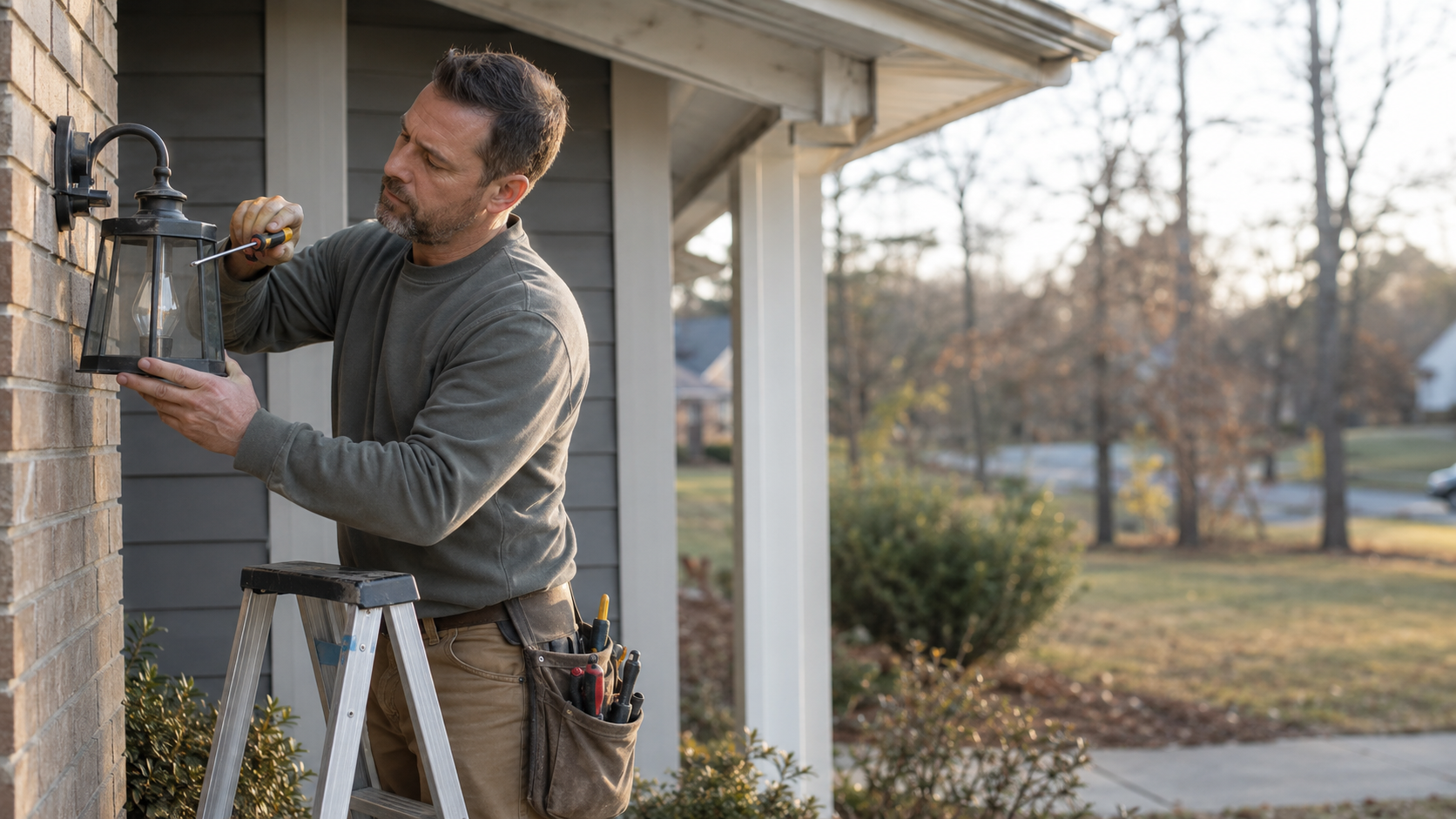
  • Aluminum Branch Wiring in Homes Built 1965 to the Mid-1970s

    Aluminum branch circuit wiring is one of the few things in a house that can be a real concern and give almost no warning that it is one. The conductors themselves are not the problem. The connections at the ends of them are, and connections live inside boxes behind cover plates where nobody looks.

    If your home was built or extended in the late 1960s or early 1970s, this is worth ten minutes of your attention. Here is how to find out what you have and what the U.S. Consumer Product Safety Commission actually recommends doing about it.

    Which homes are in the window

    CPSC explains the history in its publication on repairing aluminum wiring. A shortage of copper in the mid 1960s pushed builders to expand aluminum from a few large-power circuits, such as ranges and clothes dryers, into general purpose 15- and 20-ampere circuits. Homes built before 1965 are unlikely to have aluminum branch circuit wiring. Cables installed between 1965 and the mid 1970s, in new homes, in additions, and as part of rewired or new circuits, may contain it.

    The Electrical Safety Foundation International puts scale on that period in its overview of home wiring systems, estimating that nearly two million homes were wired with aluminum between 1962 and 1972, and noting that many receptacles and switches manufactured at the time were not intended for use with aluminum wire.

    Two points of nuance matter. Aluminum used today for service entrance conductors and large appliance circuits is a different subject; ESFI says those installations are acceptable when the connections, breakers and devices are marked “AL” and installed according to the National Electrical Code. And CPSC developed no information about aluminum-wired homes built after 1972.

    Why the connections, and not the wire

    CPSC describes several deterioration processes at aluminum wire connections that increase resistance to the flow of current. Higher resistance means heat when the circuit is loaded, and the damage is cumulative rather than self-correcting.

    The size of that difference is the part most homeowners have never heard. A national survey conducted for CPSC by the Franklin Research Institute found that homes built before 1972 and wired with aluminum are 55 times more likely to have one or more wire connections at outlets reach what the survey defined as “Fire Hazard Conditions” than homes wired with copper. That definition is specific: cover plate mounting screws reaching 300 degrees Fahrenheit, sparks emitted from the receptacle, or charred material around it.

    Read the limits of that finding too. The survey looked only at connections at outlets. It did not address the other aluminum connections and splices in a house, which CPSC notes are also prone to fail.

    Warning signs are unreliable here

    This is the uncomfortable part. CPSC states that failing aluminum-wired connections seldom provide easily detected warning signs, and that connections and splices have been reported to fail and overheat with no prior indication.

    When signs do appear, CPSC lists them as face plates on receptacles or switches that are hot to the touch, flickering lights, circuits that do not work, or the smell of burning plastic at outlets or switches. The agency’s instruction if you notice any of them is direct: have a qualified electrician determine the cause, and do not try to do it yourself, because you could be electrocuted or make the problem worse.

    Several of those symptoms overlap with ordinary load problems, which is why the general signs that wiring needs attention are worth reading alongside this. The overlap is also why identifying the conductor type early changes the whole conversation.

    How to identify what is in your walls

    CPSC says virtually all aluminum branch wiring was installed as plastic-sheathed cable, type NM, with no readily discernible difference from a cable with copper conductors. The identification is in the markings.

    1. Find cable you can see. Unfinished basements, attics and garages are where jackets are exposed.
    2. Read the printed or embossed markings on the outer jacket. Cable with aluminum conductors carries “AL” or “Aluminum” along one side, repeated every few feet.
    3. Use a flashlight held at a low angle across the surface. Embossed markings are hard to read straight on.
    4. Read the whole marking. CPSC warns that “CU-clad” or “Copper-clad” alongside “AL” means copper-coated aluminum wire, which its repair recommendations do not cover.

    If you cannot tell and you suspect aluminum, CPSC advises having a qualified electrician make the determination. Nothing here calls for removing a cover plate yourself.

    What CPSC counts as a permanent repair

    CPSC only recommends methods that are safe, effective and permanent, and on that basis it approves of three.

    • Complete replacement with copper cable. This removes the aluminum branch conductors from the equation. CPSC calls it the best method available, while acknowledging that for many homes rewiring is impractical or prohibitively expensive. Where it is practical, it becomes a rewiring project rather than a repair.
    • The COPALUM method. A short copper pigtail is joined to the aluminum at each connection point using a COPALUM connector, installed with a dedicated power tool that compresses the sleeve into what is effectively a cold weld. CPSC notes that only electricians trained by the manufacturer are authorized to install them.
    • The AlumiConn connector. Where COPALUM is unavailable, CPSC advises that this setscrew-type connector may be considered the next best alternative for a permanent repair, while noting it is newer and has less long-term field history.

    Scope matters as much as method. CPSC states that the repair should include every connection or splice involving aluminum wire in the home, including outlets, dimmers, switches, fixtures, appliances, junction boxes and panel boxes. A partial repair is a partial result, and the panel is part of the list, which is why some households handle it alongside panel-related requests.

    What CPSC advises against

    Two cheaper approaches come up often, and CPSC does not consider either one an acceptable permanent repair.

    Twist-on connector pigtails. In CPSC-sponsored laboratory and life testing, substantial numbers of these connectors overheated severely. CPSC adds that some pigtail repairs made with twist-on connectors may be prone to even more failures than the original aluminum connections.

    CO/ALR switches and receptacles. These devices are intended for direct connection to aluminum wire and perform better than non-CO/ALR devices, but CPSC reports they have failed in laboratory tests under simulated normal use, and they are not available for every part of the system, such as permanently wired appliances and ceiling fixtures. CPSC calls them, at best, an incomplete repair.

    Both may be used as an emergency, temporary repair for a failed termination, with CPSC recommending a complete repair using its recommended methods as soon as possible afterward.

    Questions worth asking before work is scheduled

    • Which of the three CPSC methods is being proposed, and why that one for this house?
    • Does the scope include every connection, including junction boxes, fixtures and hardwired appliances, or only receptacles and switches?
    • If COPALUM is proposed, who holds the manufacturer training and the tool?
    • Will the work be permitted and inspected? CPSC states that all modifications and additions to installed wiring should be performed and inspected in accordance with the regulations that apply where you live.
    • Is the scope written down before anything starts?
    • Ask the provider to confirm their licensing and insurance. It is a fair question and an easy one to answer.

    Common questions

    Does aluminum wiring mean the house has to be rewired?

    No. Full copper replacement is one of three methods CPSC recommends, and it names cost and practicality as the reasons the other two exist. Which one fits depends on how much unfinished space the house has and how many connections are involved.

    The wiring has never given us trouble. Is that reassuring?

    Less than it feels. The specific hazard CPSC describes is one that often develops without prior indications, which is why the recommendation is tied to the wiring type rather than to symptoms. An inspection request is the usual way homeowners confirm what they have.

    Is aluminum in the panel the same issue?

    Not necessarily. Larger gauge aluminum used for service entrance cables, ranges and dryers falls outside the repairs described in CPSC publication 516, and ESFI treats properly marked modern aluminum alloy service conductors as acceptable when installed to code. The subject here is 15- and 20-ampere branch circuits.

    Checking what is available near you

    This site is a connection service. It does not perform electrical work and has no technicians. It routes requests toward participating providers through service-area matching.

    If you want to find out what is available at your address, call (844) 958-2599 and say what you have seen on the cable markings, or that you want the wiring type identified. Availability varies. If a participating provider can assist, they may contact you directly, and you decide whether to move forward. You can also read how repair requests are handled on this site.

  • What a Home Electrical Inspection Actually Covers

    What a Home Electrical Inspection Actually Covers

    Ask three people what an electrical inspection is and you will get three answers. One is thinking of the walk-through that happened when they bought the house. One is thinking of the visit a city inspector made after a permit was pulled. One is thinking of an electrician spending an hour with the panel cover off. Those are different events with different scopes, and confusing them is how homeowners end up disappointed by a report that never set out to answer their question.

    Here is what each one actually covers, what gets looked at, and the moments when homeowners usually decide it is time.

    Three different things people call an electrical inspection

    The general home inspection during a sale

    A home inspection performed as part of a purchase is broad and shallow by design. A generalist looks at roof, structure, plumbing, HVAC and electrical in a single visit. On the electrical side that usually means visible conditions: the service entrance, the panel exterior, a sample of receptacles and switches, visible wiring in unfinished spaces, and obvious defects. The output is often a flag rather than a diagnosis, phrased as a recommendation to have the item reviewed further.

    That flag is doing its job. It is not meant to tell you what the repair involves or what condition the rest of the circuit is in.

    A dedicated electrical evaluation

    This is the visit most people mean when the question is specific. An electrician looks at one system rather than the whole house, and the scope is set by whatever prompted the call. If a breaker has been misbehaving, the work starts at that circuit. If the concern is capacity, it starts at the service and the panel. This is also where a panel gets opened, which a general home inspection may or may not include.

    If a panel is the reason you are asking, it is worth knowing how a panel evaluation is normally handled before anyone arrives, so the visit is not spent on questions you could have answered in advance.

    The inspection that follows permitted work

    The third kind is not something a homeowner orders. When work is done under a permit, the jurisdiction inspects it. CPSC states the principle plainly in its aluminum wiring guidance: all modifications and additions to installed wiring should be performed and inspected in accordance with the regulations that apply where you live. If a provider proposes work that needs a permit, ask who pulls it and who schedules the inspection, because that answer belongs in the scope from the start.

    What a walk-through of the electrical system tends to cover

    Scope varies with the reason for the visit, but the same handful of areas come up repeatedly.

    • The service and the meter. Where power enters, what condition the entrance is in, and what the service is rated to carry.
    • The panel. Breakers or fuses, room for additional circuits, signs of heat, and whether the circuit directory matches reality. The Electrical Safety Foundation International notes in its overview of the home electrical system that service panels installed before 1965 use fuses, that early fuses were commonly used in 30- and 60-amp panels, and that new homes today require 100- to 200-amp service panels.
    • Grounding. ESFI describes grounding as the method used to connect an electrical system to the earth with a wire, providing a third path for current in the event of a short circuit or an overload. Whether that path exists, and where, is a question a visual glance at an outlet cannot settle.
    • Receptacles and devices. Whether outlets are grounded, where ground fault protection is present, and whether devices work when tested.
    • Wiring type and era. ESFI dates knob and tube wiring to the 1800s through the 1930s and aluminum branch wiring to the 1960s and 1970s. Cable markings in an unfinished basement, attic or garage often answer this more quickly than anything else.
    • Visible damage. Discoloration, heat marks, damaged insulation, connections that were never made in a box.

    Where the findings point at conductors rather than devices, the conversation usually shifts toward wiring and rewiring work rather than a single repair.

    When homeowners actually request one

    Five situations account for most requests.

    1. A purchase or a sale. Either to understand what was flagged in the general inspection, or to know what a buyer’s inspector is likely to find.
    2. Age. ESFI recommends having your home inspected by a qualified electrician if it is older than 40 years or has had a major appliance installed. The same organization notes that more than 30 million homes, roughly one third of the housing stock in the United States, are at least 50 years old, and that fires in these aging homes occur disproportionately often.
    3. Before a renovation. Cheaper to know what is behind the wall before the drywall goes up than after. That is also when decisions about circuits get made rather than inherited, a theme covered in the notes on planning the electrical side of a renovation.
    4. A symptom that keeps coming back. Lights that dim, a receptacle that runs warm, or a breaker with a habit. If it is the breaker, sorting out whether the cause sits on one circuit or in the panel narrows the scope before anyone opens anything.
    5. A new load. A vehicle charger, a shop, a heat pump, a hot tub. ESFI advises having a qualified electrician install new circuits for high-energy use devices, and the capacity question usually gets settled at the panel first.

    What an inspection will not settle

    An evaluation reports on what can be observed and tested on the day. It does not see conductors buried in finished walls, and it is not a prediction. A panel that looks orderly can still hold a connection that has been loosening for years. This is one reason ESFI’s home electrical safety guidance leans on observable warning signs, including frequent tripping of breakers or blowing of fuses, dimming lights when other devices turn on, a buzzing sound from switches or outlets, discolored outlets, and appliances that seem underpowered.

    It also will not decide scope for you. A report separates conditions from opinions about what to do next, and the second part is a conversation, not a verdict.

    How to get more out of the visit

    • Clear physical access to the panel. Boxes stacked in front of it cost time.
    • Write down symptoms with dates and what was running. Specifics beat impressions.
    • Know the house. Year built, additions, any rewiring, when the panel was changed if it ever was.
    • Ask in advance whether the panel cover comes off during the visit, and whether a written summary is provided.
    • Ask which findings are safety items and which are housekeeping. Both belong in a report; they are not the same priority.
    • Ask any provider you speak with to confirm their licensing and insurance before work is scheduled. That is a reasonable question and a straightforward one to answer.

    Common questions

    Is the home inspection from my purchase enough?

    It depends what you need from it. For an overview at the moment of sale, it does what it was designed to do. For a specific question about capacity, grounding or a circuit that misbehaves, it is usually the starting point rather than the answer.

    Does an inspection include opening the panel?

    Not automatically, and it is worth asking before the appointment rather than after. Panel interiors are also where a lot of the useful information lives, which is why panel-related requests are often handled as their own visit.

    How often should this happen?

    There is no interval that fits every house. ESFI ties its recommendation to two triggers rather than a calendar: a home older than 40 years, or the installation of a major appliance. Renovations, a change of ownership and a recurring symptom are the other three moments worth acting on.

    What if the report finds something urgent?

    Then the question becomes what gets addressed first, which is a scoping conversation with whoever performs the work. Findings that involve heat, burning smells or exposed conductors are the ones that do not wait.

    Checking what is available near you

    This site is a connection service. It does not perform electrical work and has no technicians. It routes requests toward participating providers through service-area matching.

    If you want to find out what is available at your address, call (844) 958-2599 and describe what you want examined and why. Availability varies. If a participating provider can assist, they may contact you directly, and you decide whether to move forward. You can also read how inspection requests and repair requests are handled on this site.

  • Breaker Keeps Tripping: Circuit Problem or Panel Problem?

    Breaker Keeps Tripping: Circuit Problem or Panel Problem?

    A breaker that trips is doing the job it was built to do. It cuts power before a circuit carries more current than its wiring can safely handle. So the question worth answering is not how to make the tripping stop. It is where the cause sits: on one branch circuit, or in the panel that feeds all of them.

    Those two answers lead to completely different work. You can gather most of what an electrician needs without ever removing the panel cover, and the observations below are the ones that matter.

    What the trip is telling you

    Breakers open for two broad reasons. One is overload, where a circuit is asked to carry more current than the breaker is rated to pass, usually because too many things are running on it at once. The other is a fault, where current finds a path it was never meant to take, either between conductors or to ground.

    The two behave differently, and the difference is easy to observe. An overload builds. You start the microwave while the toaster is running, and the breaker gives out a few seconds later. A fault is immediate. You reset the breaker and it snaps back off right away, sometimes before you have let go of the handle.

    Note which one you are seeing. It is the single most useful thing you can hand to an electrician.

    Signs the problem lives on one circuit

    A circuit-level issue is usually well behaved, in the sense that it is predictable. The same breaker trips. It trips when a particular appliance runs or when a particular room is busy. Leave that appliance off and the breaker holds for weeks.

    The Electrical Safety Foundation International lists the warning signs of an overloaded electrical system as:

    • Frequent tripping of circuit breakers or blowing of fuses
    • Dimming of lights when other devices are turned on
    • Buzzing sound from switches or outlets
    • Discolored outlets
    • Appliances that seem underpowered

    Read that list with one circuit in mind rather than the whole house. If the lights dim only in the back bedroom when the window unit kicks on, you are looking at one circuit carrying too much. If they dim everywhere, keep reading.

    A simple way to confirm it

    1. Before you reset anything, write down what was running and in which rooms.
    2. Turn off or unplug the high-draw items on that circuit. Space heaters, window air conditioners, hair dryers, microwaves and portable cooktops are the usual suspects.
    3. Reset the breaker and bring items back one at a time, leaving a few minutes between each.
    4. When it trips again, you have found either the appliance or the combination that pushes the circuit past its limit.
    5. Move one of those items to an outlet on a different circuit and see whether the trips stop.

    If relocating a single appliance solves it, the wiring is not necessarily faulty. The circuit is simply carrying more than it was laid out for, and the durable fix is usually a dedicated circuit for that appliance rather than anything at the panel. ESFI gives the same advice: have a qualified electrician install new circuits for high-energy use devices.

    When it trips the instant you reset it

    Stop the redistribution testing. A breaker that will not stay on with everything unplugged is not reporting an overload. Something is wrong on that circuit itself, whether that is a damaged cable, a failing appliance, moisture in an outdoor box or a loose connection inside a device. Repeated resetting does not clear it and does not tell you anything new.

    The same logic applies to a ground fault interrupter that keeps cutting out. A GFCI is designed to open when it senses current leaking out of the intended path, so a persistent trip is a report, not a nuisance to be reset away. If the symptom follows a whole room or an older section of the house rather than one device, it may be a wiring problem rather than a load problem.

    Signs the problem is at the panel

    Panel-level problems are messier. They do not respect the neat boundary of a single circuit, and they show up as patterns rather than one repeatable trip.

    • Different breakers trip at different times, with no shared appliance and no obvious pattern.
    • The main breaker trips, killing the whole house rather than one room.
    • Lights across the house dim or flicker when the air conditioner, well pump or dryer starts, not just in one room.
    • A breaker feels warm through the panel cover, or the cover itself is warm or discolored.
    • You hear buzzing, humming or crackling coming from the panel.
    • A breaker sits loose in its slot, or the handle feels mushy and does not click firmly into position.
    • Every slot is occupied, tandem breakers are doubled into positions, and there is nowhere to add a circuit.
    • There is a burning smell, or scorch marks around the panel or on a breaker.

    The last two entries are different in kind from the rest. A full panel is a capacity conversation you can have on your own schedule. A burning smell is not a conversation at all, and the section below explains why.

    Age matters here too. Plenty of homes around Birmingham were wired for a household with one television, no central air and nothing charging overnight. ESFI advises having a home inspected by a qualified electrician if it is older than 40 years or has had a major appliance installed. That advice covers a large share of Alabama housing stock.

    If several of the panel-level signs match your situation, an inspection rather than a single repair is often the more useful starting point, because it looks at the service as a whole instead of chasing one breaker. It is also worth reading what a panel evaluation involves before you talk to anyone, so the vocabulary is familiar when you do.

    Patterns that get misread

    A few situations look alarming and usually are not what people assume.

    The whole house is dark. Before you blame the panel, check whether the neighbors have power and whether the main breaker handle is in the off position. A utility outage and a tripped main look identical from inside the house.

    Roughly half the house is dead. Some lights and outlets work, others do not, and the pattern does not follow any one circuit. Report this exactly as you observed it instead of troubleshooting further. It can involve the conductors feeding the panel rather than anything happening inside it.

    Everything works, but the lights flicker constantly. Flicker without tripping still deserves attention, because it can come from a loose connection anywhere between the utility drop and the fixture, and loose connections generate heat. When flicker arrives alongside other symptoms, the signs that point at the wiring itself are worth reviewing.

    When to stop troubleshooting

    Some symptoms end the observation phase. Do not remove the panel cover, do not keep resetting, and do not keep the circuit in service if you see any of these:

    • A burning or hot-plastic smell near the panel, an outlet or a switch
    • Scorch marks, melted plastic or discoloration on a breaker, outlet or panel cover
    • A panel cover or breaker that is warm or hot to the touch
    • Sparks, arcing sounds or visible smoke
    • A shock or tingle from an appliance, a faucet or a switch plate
    • Water inside or near the panel, or a panel that has been wet
    • A breaker that trips immediately every time, with nothing plugged in

    If there is smoke or an active burning smell, treat it as a fire call rather than a service call. Otherwise, switch off the affected circuit from the front of the panel if you can do so safely, leave it off, and get an electrician involved.

    What to have ready before you describe the problem

    • Which breaker trips, and what its label says, if the panel is labeled at all
    • Whether it trips instantly on reset or after a delay
    • What was running each time it happened
    • How long it has been going on, and whether it is getting worse
    • The rough age of the house, and whether the panel has ever been replaced
    • A photo of the panel with the cover on, showing the breaker layout and any labeling

    Two habits are worth keeping regardless of who ends up doing the work. Label the breakers once somebody has the panel open, which ESFI recommends as a basic safety step. And ask any provider you speak with to confirm their licensing and insurance, and to put the scope of work in writing before anything starts.

    Questions people actually ask

    Is it bad to keep resetting a breaker?

    Resetting once to see whether the trip repeats is reasonable. Resetting the same breaker over and over is not, because you are overriding the one device telling you something is wrong. If it trips twice for the same reason, look for the cause instead.

    Does a tripping breaker mean I need a panel upgrade?

    Not on its own. A single circuit that trips under a predictable load usually points at that circuit, not at the service. A panel upgrade enters the conversation when the panel is out of space, when the whole house dims under load, when the main trips, or when the equipment shows heat damage. Searches for an electrical panel upgrade or a breaker panel replacement in Birmingham often begin with one nagging breaker, and the answer frequently turns out to be smaller than expected.

    Can I just put in a bigger breaker?

    No. A breaker is matched to the wire it protects. Fitting a higher-rated breaker does not add capacity to the circuit, it removes the protection that keeps the wiring from overheating. Breaker sizing belongs with someone who can verify what is behind the wall.

    Why does it only trip in summer?

    Because the load changes with the season. Air conditioning, dehumidifiers and pool equipment can push a circuit that was comfortable in March past its limit in July. Seasonal tripping is one of the clearer indications of an overload rather than a fault.

    Checking what is available near you

    This site is a connection service. It does not perform electrical work and has no technicians. What it does is route requests toward participating providers through service-area matching.

    If you want to find out what is available for your address, call (844) 958-2599 and describe what the breaker is doing, using the notes above. Availability varies. If a participating provider can assist, they may contact you directly, and you decide whether to move forward. You can also read more about panel-related requests or how repair requests work here first.

  • Electrical Planning for Home Renovations in Montgomery’s Established Neighborhoods

    Electrical Planning for Home Renovations in Montgomery’s Established Neighborhoods

    Electrician checking an outdoor light fixture on an Alabama home

    Renovating a home in one of Montgomery’s established neighborhoods often means working around existing wiring while planning for how the space will be used going forward.

    Homeowners planning a renovation typically want to know how the existing electrical system will handle the new layout — additional outlets, updated lighting, or new appliance circuits. Bringing an independent provider in early, before renovation work starts, can help avoid surprises partway through the project.

    For properties that may be subject to local design review, it’s worth confirming any requirements with the city before finalizing your renovation plans.

    See all services in this area Learn more about this service

    Request Electrical Service

    Takes less than a minute. If a participating provider can assist, they may contact you directly to discuss availability and next steps.

    Need residential electrical help in Alabama?

    Call to check whether a participating electrical service provider may serve your area.

    Call (844) 958-2599

    Alabama Electrical Pro is a referral service and does not directly perform electrical work. Service availability is not guaranteed.

    Frequently Asked Questions

    Should I involve an electrical provider before or during renovation planning?

    Many homeowners find it helpful to loop a provider in early, so electrical needs are considered alongside the rest of the renovation plan.

    Can existing circuits handle a kitchen or bathroom remodel?

    It depends on the home’s current setup and the scope of the remodel — a provider can evaluate this directly.

  • Updating Lighting in a Montgomery Home Without Losing Its Character

    Updating Lighting in a Montgomery Home Without Losing Its Character

    Electrician checking an outdoor light fixture on an Alabama home

    Montgomery has a number of established neighborhoods where homeowners want to modernize their lighting without changing the character of the home.

    Replacing outdated fixtures — whether it’s a dated ceiling fixture, wall sconces, or exterior lighting — is one of the more common lighting requests in Montgomery. For homes that may fall within a locally reviewed area, it’s worth checking with the relevant city office about any design considerations before finalizing fixture choices.

    An independent provider can talk through options that fit both the practical wiring situation and the look you’re going for, but questions about historic review or permitting should be directed to Montgomery’s Historic Preservation Commission or Architectural Review Board directly.

    See all services in this area Learn more about this service

    Request Electrical Service

    Takes less than a minute. If a participating provider can assist, they may contact you directly to discuss availability and next steps.

    Need residential electrical help in Alabama?

    Call to check whether a participating electrical service provider may serve your area.

    Call (844) 958-2599

    Alabama Electrical Pro is a referral service and does not directly perform electrical work. Service availability is not guaranteed.

    Frequently Asked Questions

    Do I need approval to change light fixtures in Montgomery?

    This depends on your property’s location and any applicable local review process — check with the city directly.

    Can outdoor lighting be added without major rewiring?

    It depends on your home’s existing setup. A provider can evaluate what’s involved for your specific property.

  • What to Expect During an Electrical Panel Evaluation in Birmingham

    What to Expect During an Electrical Panel Evaluation in Birmingham

    Electrician checking an outdoor light fixture on an Alabama home

    For Birmingham homeowners dealing with an older panel or planning a renovation, a panel evaluation is often one of the first steps.

    In general, a provider will look at the panel itself, the breakers, and how the current setup handles your home’s electrical demand. The specific scope of an evaluation varies by provider, so it’s worth asking directly what’s included when you submit a request.

    If the evaluation identifies a need for repair, replacement, or a capacity upgrade, the provider will walk you through the options — cost, timeline, and next steps are matters to discuss with them directly, not something this site determines in advance.

    See all services in this area Learn more about this service

    Request Electrical Service

    Takes less than a minute. If a participating provider can assist, they may contact you directly to discuss availability and next steps.

    Need residential electrical help in Alabama?

    Call to check whether a participating electrical service provider may serve your area.

    Call (844) 958-2599

    Alabama Electrical Pro is a referral service and does not directly perform electrical work. Service availability is not guaranteed.

    Frequently Asked Questions

    How long does a panel evaluation take?

    This varies by provider and the scope of the evaluation — ask when you schedule.

    Will I be told if my panel needs to be replaced?

    If a provider identifies an issue, they’ll typically explain what they found and discuss options with you.

  • Signs Your Birmingham Home’s Wiring May Need Attention

    Signs Your Birmingham Home’s Wiring May Need Attention

    Electrician checking an outdoor light fixture on an Alabama home

    Much of Birmingham’s housing stock is established, and older wiring can develop issues that aren’t always obvious until something stops working right.

    Homeowners in Birmingham often reach out about a breaker that trips more than it used to, outlets that feel warm to the touch, lights that flicker without an obvious cause, or switches that have simply stopped working. Any of these can range from a minor fix to something that needs closer attention — an independent provider can evaluate the specific issue rather than guessing from a description alone.

    If you’re renovating or adding new fixtures to an older Birmingham home, it can also be worth having the existing wiring looked at first, since new circuits sometimes reveal issues with what’s already there.

    See all services in this area Learn more about this service

    Request Electrical Service

    Takes less than a minute. If a participating provider can assist, they may contact you directly to discuss availability and next steps.

    Need residential electrical help in Alabama?

    Call to check whether a participating electrical service provider may serve your area.

    Call (844) 958-2599

    Alabama Electrical Pro is a referral service and does not directly perform electrical work. Service availability is not guaranteed.

    Frequently Asked Questions

    Is a warm outlet always serious?

    It can range from minor to a real concern. It’s worth having it evaluated rather than waiting.

    How old does wiring have to be before it’s a concern?

    Age alone isn’t the deciding factor — condition and how the home is used matter more. A provider can assess your specific situation.

  • Wiring Considerations When Finishing a Basement or Garage in Huntsville

    Wiring Considerations When Finishing a Basement or Garage in Huntsville

    Electrician checking an outdoor light fixture on an Alabama home

    As Huntsville households grow into their homes, finishing a basement or garage into usable living space is a common project. Electrical planning is a key part of getting it right.

    A finished space usually needs more than the minimal wiring in an unfinished garage or basement — think lighting layout, enough outlets for how the room will actually be used, and possibly a dedicated circuit for larger equipment. Getting this planned before drywall goes up avoids costly rework later.

    A participating provider can walk the space with you and talk through what’s realistic given your home’s existing panel and circuits, rather than assuming a one-size-fits-all wiring plan.

    See all services in this area Learn more about this service

    Request Electrical Service

    Takes less than a minute. If a participating provider can assist, they may contact you directly to discuss availability and next steps.

    Need residential electrical help in Alabama?

    Call to check whether a participating electrical service provider may serve your area.

    Call (844) 958-2599

    Alabama Electrical Pro is a referral service and does not directly perform electrical work. Service availability is not guaranteed.

    Frequently Asked Questions

    Can I add outlets to an unfinished garage myself?

    This site doesn’t provide do-it-yourself instructions for electrical work — connect with an independent provider for any wiring changes.

    Does a finished basement need its own circuit?

    Sometimes, depending on what will be plugged in. A provider can assess your specific plans.

  • Electrical Panel Upgrades for New Construction in Huntsville

    Electrical Panel Upgrades for New Construction in Huntsville

    Electrician checking an outdoor light fixture on an Alabama home

    Huntsville’s pace of new construction has been strong, with the Planning Commission approving 1,892 single-family lots in 2025 alone. Whether you’re building new or adding onto an existing home, the electrical panel needs to keep up with modern demand.

    A panel that was adequate for a smaller, older home may not have the capacity for today’s appliance loads, home offices, or EV charging setups. A participating provider can evaluate your specific situation — this is not something that can be judged from general guidelines alone, since it depends on your home’s existing wiring, panel age, and planned usage.

    If you’re in the middle of new construction or planning an addition in Huntsville, it’s worth having this conversation early, before walls are closed up. Retrofitting is possible but usually more involved than planning capacity from the start.

    See all services in this area Learn more about this service

    Request Electrical Service

    Takes less than a minute. If a participating provider can assist, they may contact you directly to discuss availability and next steps.

    Need residential electrical help in Alabama?

    Call to check whether a participating electrical service provider may serve your area.

    Call (844) 958-2599

    Alabama Electrical Pro is a referral service and does not directly perform electrical work. Service availability is not guaranteed.

    Frequently Asked Questions

    Do I need a bigger panel for a home addition?

    It depends on what you’re adding and your current panel’s capacity — a provider can evaluate your specific plans.

    Should I plan for EV charging now even if I don’t have an EV yet?

    Some homeowners do plan ahead for this. It’s worth mentioning to your provider so they can factor it into any capacity discussion.

Disclaimer: Alabama Electrical Pro is a service to assist homeowners in connecting with local service providers. All contractors/providers are independent and Alabama Electrical Pro does not warrant or guarantee any work performed. It is the responsibility of the homeowner to verify that the hired contractor furnishes the necessary license and insurance required for the work being performed. All persons depicted in a photo or video are actors or models and not contractors listed on Alabama Electrical Pro.

Same-day and 24/7 emergency services are subject to provider participation, location, technician availability, and demand. Availability is not guaranteed and may vary by market and appointment capacity.